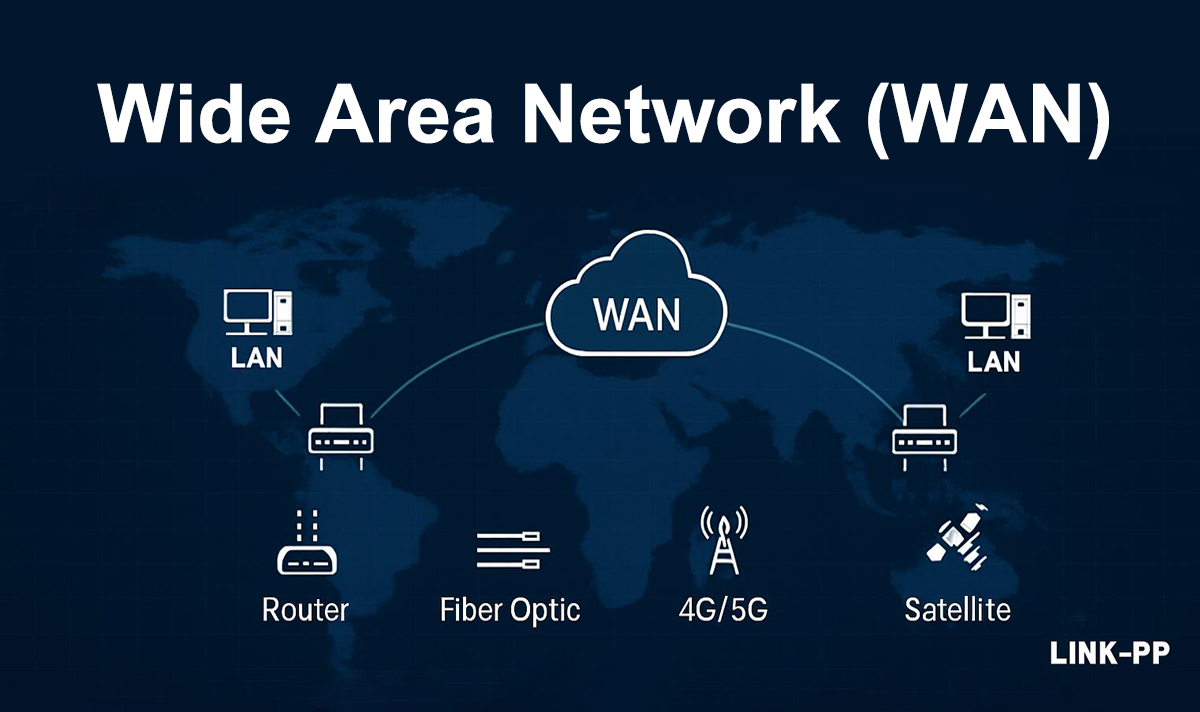

A Wide Area Network (WAN) is a telecommunications network that extends over a large geographical area. Instead of connecting computers in a single room or building, a WAN connects smaller networks across cities, states, or even entire countries.
The most famous and massive example of a WAN? The Internet itself.
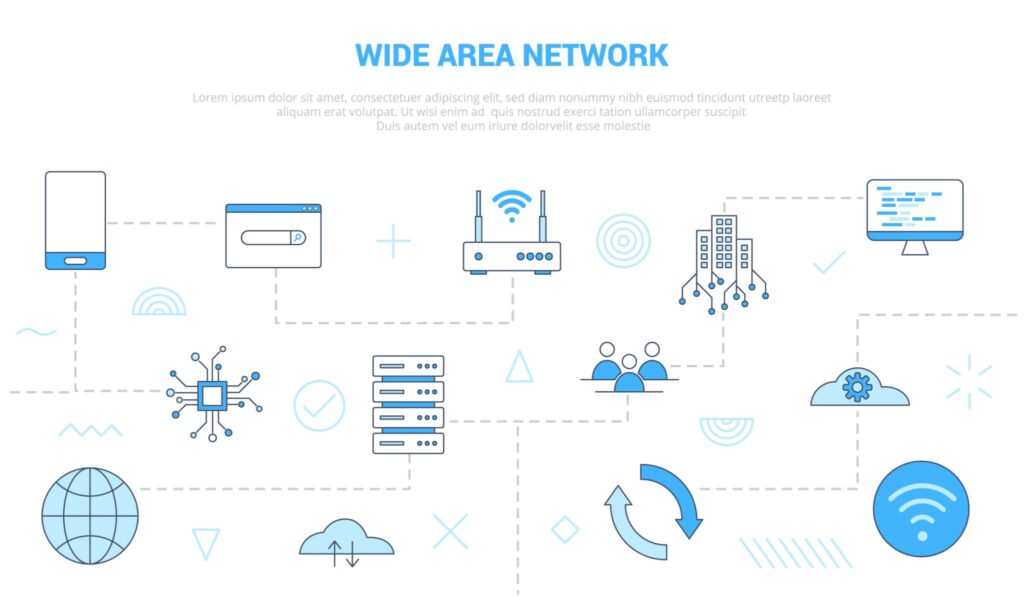
How a WAN Works
Think of a standard home or office network as a Local Area Network (LAN). It’s private, fast, and physically confined. A WAN essentially links these isolated islands together.
For instance, if a bank has a headquarters in New York, a branch in London, and a data center in Tokyo, it uses a WAN to ensure an employee in London can securely access data sitting on the Tokyo servers.
Core Technologies
To bridge these massive distances, WANs rely on infrastructure that goes far beyond a standard Ethernet cable:
- Leased Lines: Dedicated, direct fiber-optic connections rented from telecom providers (like T1 or T3 lines) for private, high-speed data transmission.
- Cellular & Satellite: Using 4G/5G or low-Earth orbit satellites (like Starlink) to connect incredibly remote sites where laying cables is impossible.
- VPNs (Virtual Private Networks): Rather than renting an expensive private line, many companies use encrypted “tunnels” over the public internet to securely transport data.
- SD-WAN (Software-Defined WAN): The modern standard. It uses software to automatically route traffic over the most efficient and cost-effective connection available at any given second (e.g., shifting heavy video calls to a leased line and basic emails to a standard broadband connection).
Key Differences: LAN vs. WAN
| Feature | LAN (Local Area Network) | WAN (Wide Area Network) |
|---|---|---|
| Geographic Scope | Small (a home, school, or office building) | Large (cities, countries, or global) |
| Ownership | Privately owned by the person or organization | Built by telecom providers; leased by users |
| Speed | Very high (typically 1 Gbps to 10 Gbps) | Variable and generally slower due to distance |
| Cost | Low setup and maintenance costs | High setup costs or ongoing monthly lease fees |