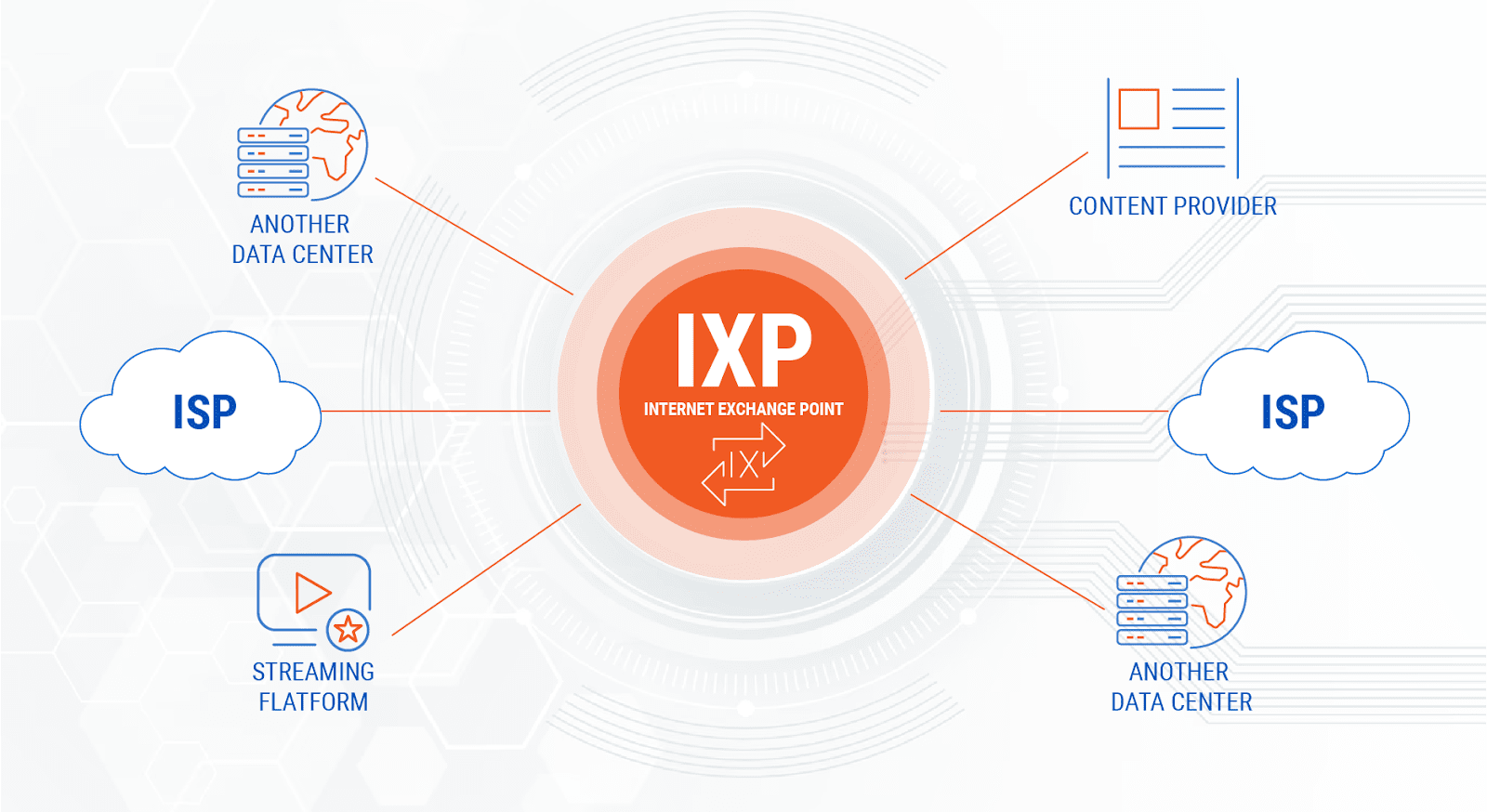

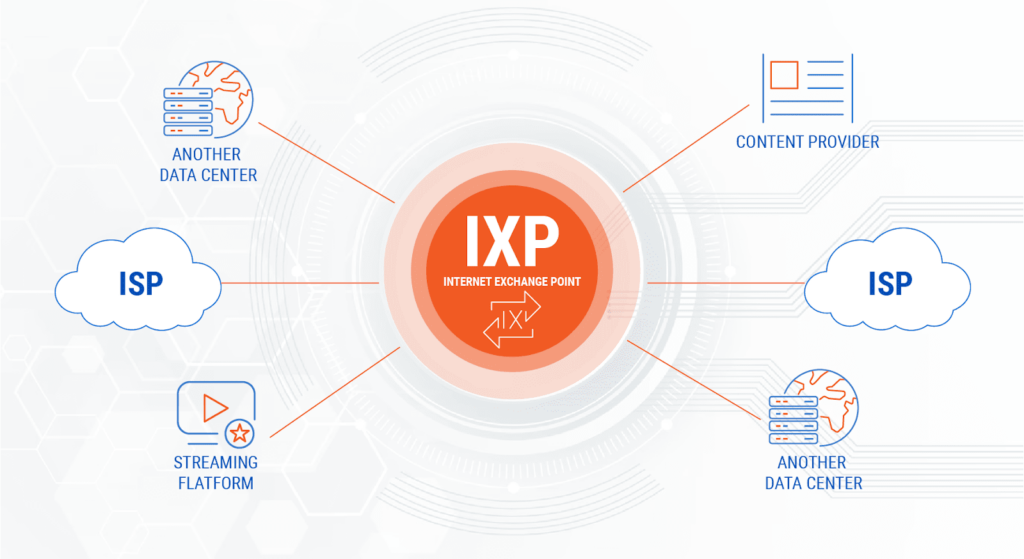
An Internet Exchange Point (IXP) is a physical location—essentially a data center filled with high-speed network switches—where different internet providers, content delivery networks (CDNs), and tech giants connect their networks directly to one another.
Think of it as a central transit hub for the internet.
Without IXPs, if you wanted to send traffic from an ISP (like Comcast) to a content provider (like Netflix), the data would have to travel through third-party transit networks, often taking a long, expensive route across regions or continents. At an IXP, these networks plug into the same switch, allowing them to pass traffic directly back and forth.
Why IXPs Matter: The Three Pillars
- Massively Decreased Latency: By connecting directly, data takes the shortest physical path possible. This dramatically reduces lag for online gaming, video calls, and streaming.
- Lower Transit Costs: ISPs pay for data that travels over long-distance transit networks. By “peering” (exchanging traffic for free or low cost) at a local IXP, they avoid those hefty transit fees.
- Improved Reliability: If a major fiber-optic line is cut somewhere, IXPs provide alternative local routing paths, keeping local internet services online.
Direct Peer-to-Peer vs. Traditional Transit
Here is how data flows change when networks utilize an IXP:
| Feature | Without an IXP (Transit Provider) | With an IXP (Direct Peering) |
|---|---|---|
| Data Path | Indirect; travels through third-party upstream networks. | Direct; passes across a shared switch in the same room. |
| Cost Model | Charged per gigabyte/megabyte of data transferred. | Usually free or a flat port fee, regardless of traffic volume. |
| Speed/Latency | Higher, due to extra “hops” between networks. | Extremely low; sub-millisecond local transfers. |
Who uses them? You’ll find thousands of networks connected to global IXPs, including internet service providers (ISPs), major tech companies (Google, Apple, Microsoft), streaming platforms (Netflix, Twitch), and content delivery networks (Cloudflare, Akamai).
Some of the largest IXPs in the world handle tens of terabits of data per second. Examples include DE-CIX in Frankfurt, AMS-IX in Amsterdam, and LINX in London.